Foods You Can't Eat With Missing Teeth or Dentures (Sabah Edition)
Ikan bakar, hinava, satay: tooth loss quietly edits what you order in Kota Kinabalu. A Sabah dentist on what missing teeth really take away, and how people get it back.
By Dr Ghanarupan, Borneo Dental Centre, Kota Kinabalu, Sabah
Tooth loss doesn’t announce itself.
It edits your order.
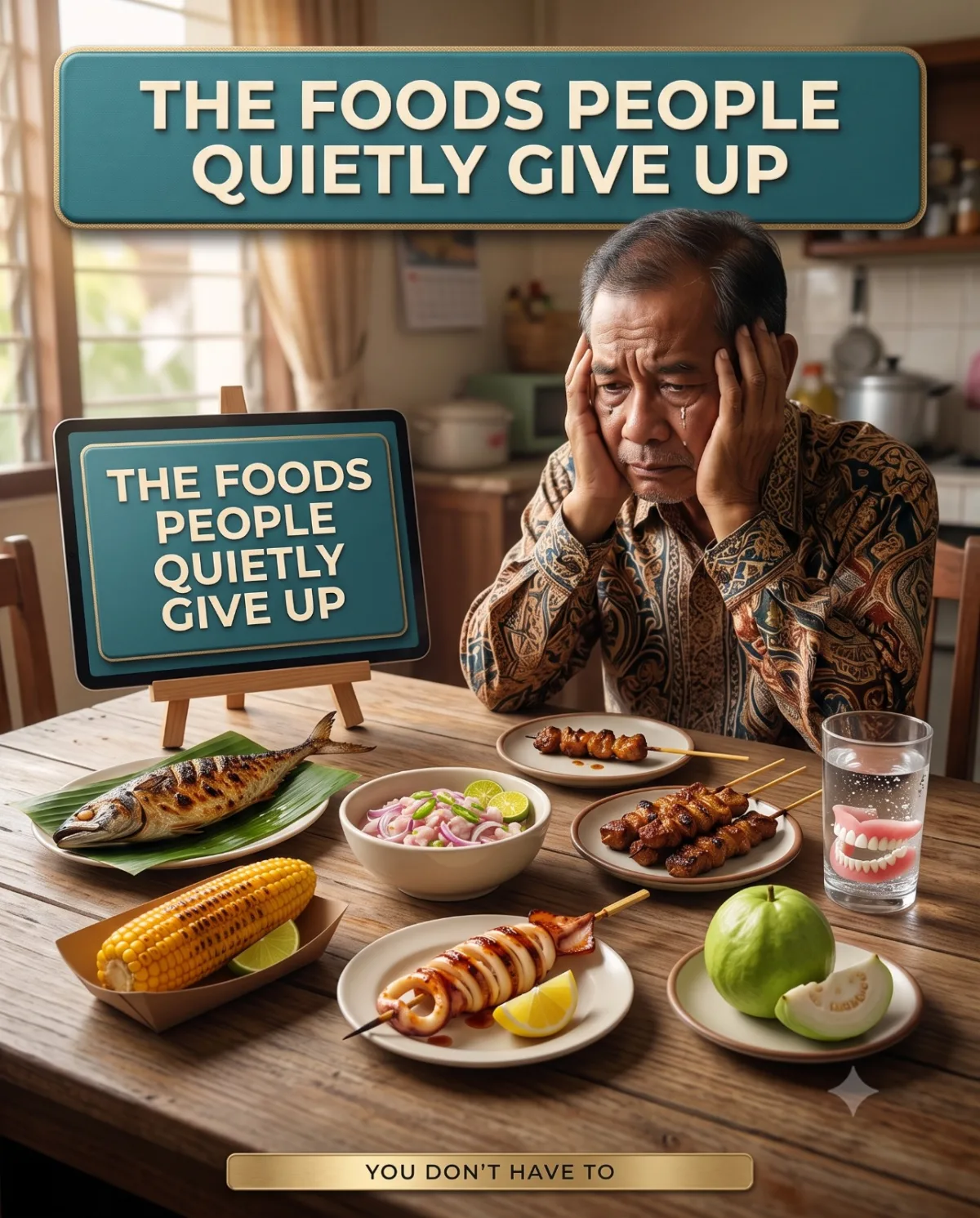
It starts small. At the ikan bakar stall in Kota Kinabalu, you pick the softer fish. At the satay stand, you take the meat off the stick first and cut it up. Somewhere along the way, jagung bakar became “too much work.” Guava, you love guava, quietly left the rotation. Hinava, with its firm, springy fish? “Next time.”
Nobody decides to give these up. There’s no announcement, no goodbye. The menu of your life just gets shorter, one small edit at a time, until one day someone orders sugarcane juice with the actual cane to chew, and you feel something you didn’t expect to feel about food: left out.
The first three articles in this series explained the engineering: what an implant is, why the bone clock matters, why quality decides everything. This one is about the part engineering exists for: getting your table back.
The quiet edits (see if you recognise yourself)
After years of these conversations in our Kota Kinabalu clinic, the pattern is remarkably consistent. People with missing back teeth or loose dentures almost never say “I can’t eat.” They say:
“I just cut everything small now.”
“I chew on the left. Only the left.”
“I order the soup version.”
“I finish last. Every meal. My family waits for me.”
“I check the menu for soft things first. Then I choose.”
And the biggest one, the one that has nothing to do with nutrition: “At kenduri, I take a little rice and gravy, and I tell everyone I’m not that hungry.”
That’s not an eating problem. That’s a life problem wearing an eating problem’s clothes.
Why this happens: the two-minute science
If you have missing back teeth: molars do the heavy grinding. Lose one or two, and the work shifts to teeth never designed for it, front teeth that tear but can’t grind, and the other side of your mouth, which now does double shifts (that “I only chew on the left” habit). Meals get slower, food gets swallowed less chewed, and hard or springy textures such as sotong, tendon in ngiu chap, and hinava quietly become opponents.
If you wear dentures, there are two problems, and only one is famous.
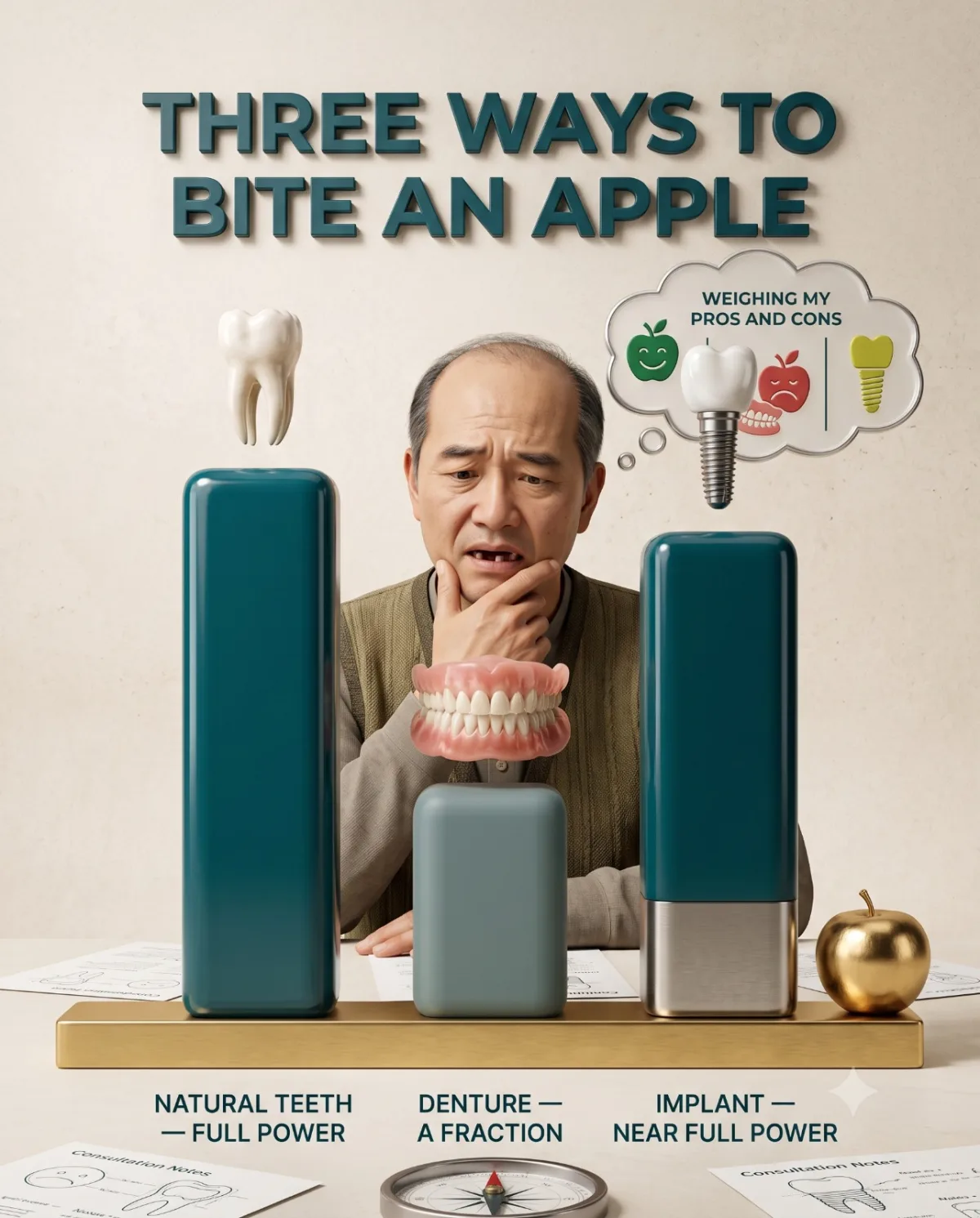
The famous one is grip: a denture rests on the gum, so biting into anything that fights back, an apple, corn on the cob, satay straight off the stick, risks the thing moving. Denture wearers typically chew with a small fraction of their natural bite force. It’s the difference between cutting with a knife that’s held firmly and one that’s lying loose on the table.
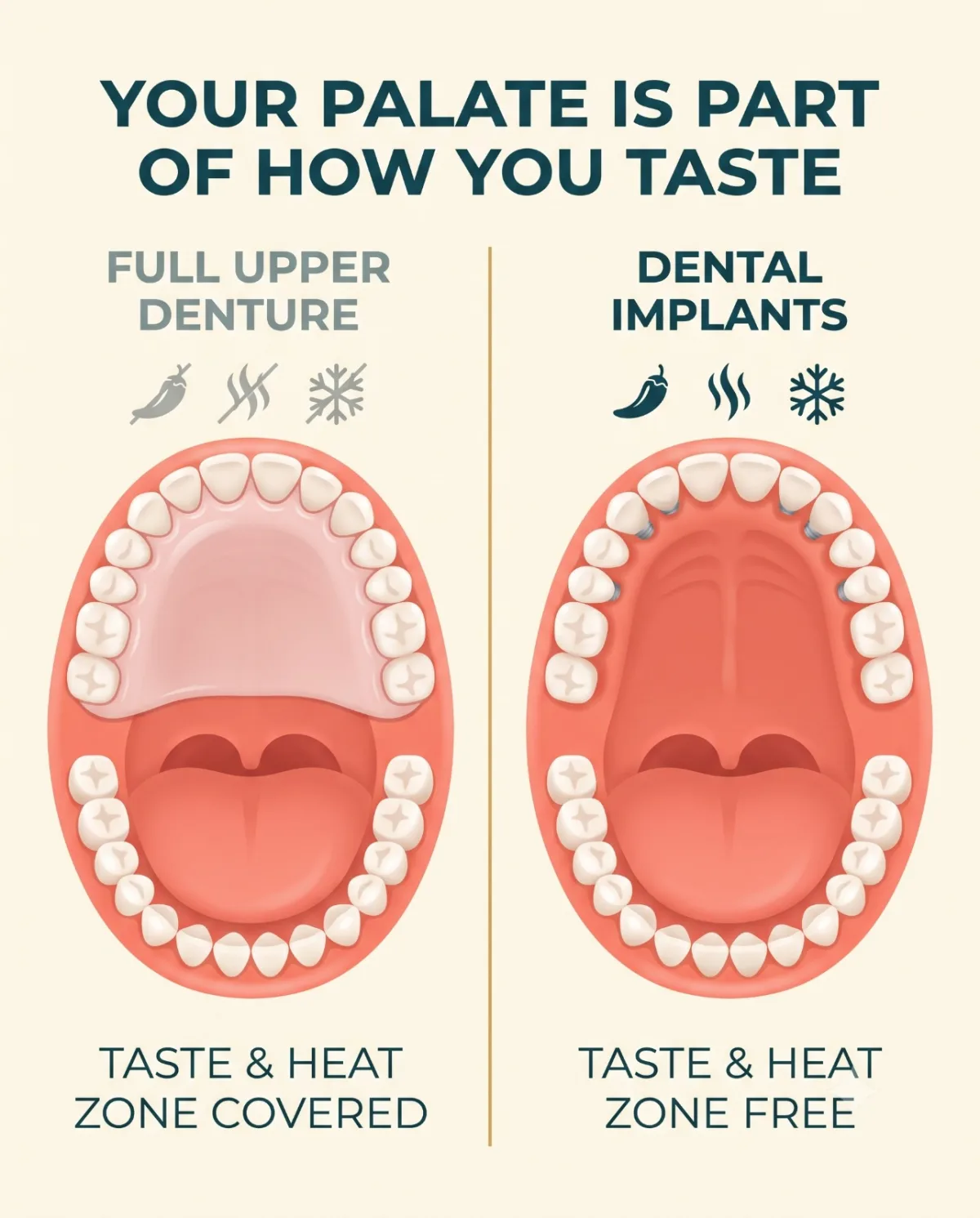
The second problem almost nobody warns you about: a full upper denture covers the roof of your mouth, and the roof of your mouth is part of how you taste. The palate senses temperature, texture, and contributes to flavour. Cover it with acrylic, and hot soup arrives blunted, sambal loses its edges, food becomes... quieter. Many long-time denture wearers assume their taste faded with age. Often, it’s the plastic.
What an implant actually restores
Here’s where the series connects. An implant is anchored in the bone, piling, remember, so when you bite, the force travels the same road it did with your natural tooth: crown → root → jaw. Nothing rests on the gum. Nothing needs to grip. Nothing covers the palate.
In practical terms, implant patients chew at close to natural force, enough that the honest answer to “what can I eat after it heals?” is: whatever you were eating before you lost the tooth. Ikan bakar with the good, firm fish. Jagung straight off the cob. Satay off the stick, standing up, like everyone else at the stall in Kota Kinabalu.
The thing patients mention most at reviews isn’t the chewing, though. It’s the not thinking. Not scanning the menu for soft options. Not doing mental risk assessment on a piece of fruit. The tooth stops being a daily calculation, which, if you’ve been calculating for years, is its own kind of quiet.
Rapid-fire answers
How soon after an implant can I eat normally? Soft foods during the healing weeks; once the final crown is fitted on the fused implant, you build back to a full normal diet. Your specialist gives you the exact timeline for your case.
Can I really bite an apple with an implant? Once fully healed and restored, yes. The implant is anchored in bone, not resting on gum. (Sensible care applies to implants exactly as it does to natural teeth: nobody should open bottle caps with either.)
I wear a full denture, can implants help without replacing every tooth? Yes. A small number of implants can anchor a denture so it clicks firmly into place, one of the most life-changing upgrades in dentistry for long-time denture wearers, and often the first step people choose. Ask about it at your assessment.
Will food taste different with an implant? Compared to a full upper denture, yes, because nothing covers your palate. Compared to your natural teeth, no difference; the implant doesn’t affect taste at all.
What’s your first meal back? Kota Kinabalu & Penampang
Everyone has one, the dish they’d order first if chewing wasn’t a calculation. Ours is a genuine question, because it’s usually where the treatment conversation actually starts.
Book an Implant Assessment at Borneo Dental Centre, with branches in Luyang, Kota Kinabalu and Pavilion Bundusan, Penampang, Sabah: a 3D CBCT scan, a digital preview, and a written plan in plain language. Every implant here is placed by our dental specialist, using the Straumann system. Eligible patients can split treatment over six months, interest-free; ask us when you visit.
Borneo Dental Centre: world-class dentistry in Kota Kinabalu, Sabah. 📞 +6019-411 1213 · 💬 WhatsApp us · 🌐 Book your Implant Assessment
Next in the series: why long-term denture wearers often look older than their siblings, the face-shape story nobody warns you about.
Dr Ghanarupan practises at Borneo Dental Centre, Kota Kinabalu, where all dental implants are placed by the centre’s dental specialist.